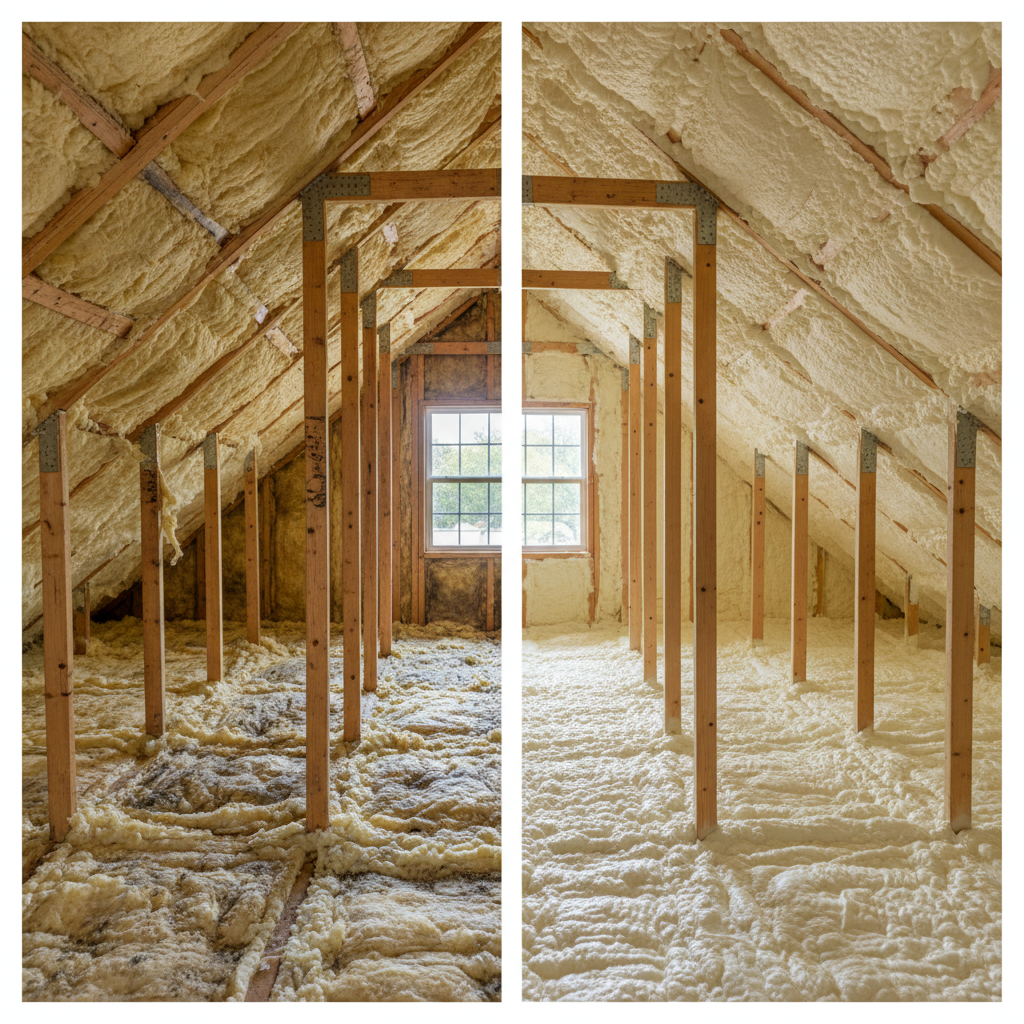
Choosing between different application styles or formulations of open-cell spray foam comes up when we talk to homeowners around the Fischer or Hinman Island areas. People want to know if upgrading to a specific product tier or application density is worth the extra cost on their monthly electric bill, especially when our Texas summers get very hot.
Summit Insulation spends a lot of time crawling through attics that feel like giant convection ovens. We will break down the two main ways people approach open-cell spray foam installation so you can figure out what actually makes sense for your property without wasting your money.
The Core Differences in Plain English
When we talk about open-cell options, you are usually looking at standard low-density formulations versus premium high-yield or specialty mix options. Both expand rapidly to lock out air drafts, but they behave a bit differently once they cure against your roof deck or exterior walls.
- Standard open-cell foam gives you great sound dampening and fills every nook at a lower price point.
- Specialty high-yield or semi-rigid mixes offer tighter cell structures and better structural stability while still remaining vapor-permeable.
Cost and Upfront Investment
Money matters, and standard open-cell is generally the more budget-friendly route. It uses fewer chemical resources per board foot, which keeps material costs lower on large attic retrofits. Premium formulations cost more per square foot because of specialized blowing agents and higher resin density. If you are on a strict budget, standard open-cell usually wins the initial quote battle. Just keep in mind that cheaper is not always better if your framing requires specific performance characteristics.
How They Handle the New Braunfels Climate
Our local weather swings between humid river mornings and scorching dry heat waves. Open-cell foam lets moisture vapor pass through it rather than trapping it against your wooden framing. That is an important advantage in our climate zone because trapped moisture leads to rot. However, standard formulations can absorb water like a sponge if there is an active roof leak. Higher-end or denser open-cell options sometimes offer slightly better moisture resistance properties, though neither acts as a complete vapor barrier on its own. If total moisture blocking is your main concern, you would be looking at closed-cell instead.
Durability and Maintenance Over Time
Once open-cell foam cures, it stays put. It does not settle like blown-in cellulose or fiberglass batts. Standard open-cell is soft and spongy to the touch. If someone crawls into your attic to service the HVAC unit and accidentally bumps a wall cavity, standard foam can dent or tear more easily. Premium or semi-rigid choices hold up a bit better to physical abuse. Maintenance is mostly about keeping an eye on your roof. Neither option requires patching or spraying again unless you experience a major leak that forces you to cut out a section.
My Local Recommendation
If you are insulating an unvented attic assembly in a typical New Braunfels home, standard open-cell spray foam hits the sweet spot for cost and thermal performance. It brings those blazing attic temperatures down significantly and quiets down the loud noise of heavy Texas thunderstorms hitting your roof. Go with the standard option if you want maximum bang for your buck on a residential retrofit. Step up to a denser formulation only if you need extra rigidity or have specific architectural details that demand a tougher surface skin. Summit Insulation provides open-cell spray foam services for homes and businesses in New Braunfels.